Ephesus Ancient City
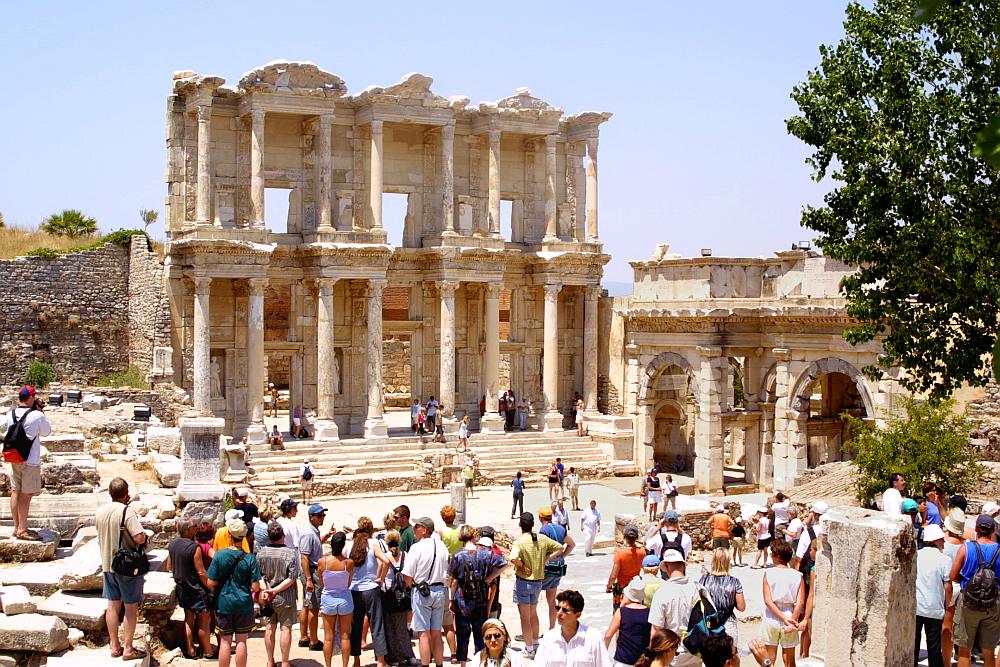
Ephesus Ancient City, which is one of the UNESCO World Heritage and an important center for the Ancient Period, has been an important port city by the most important civilizations for 9000 years (based on the 10th century BC). The ancient city of Ephesus, which has the outstanding urbanization characteristics of the Hellenistic, Roman, Eastern Roman and Ottoman periods, has become cultural and commercial center and reflects the architectural and religious history of the period.
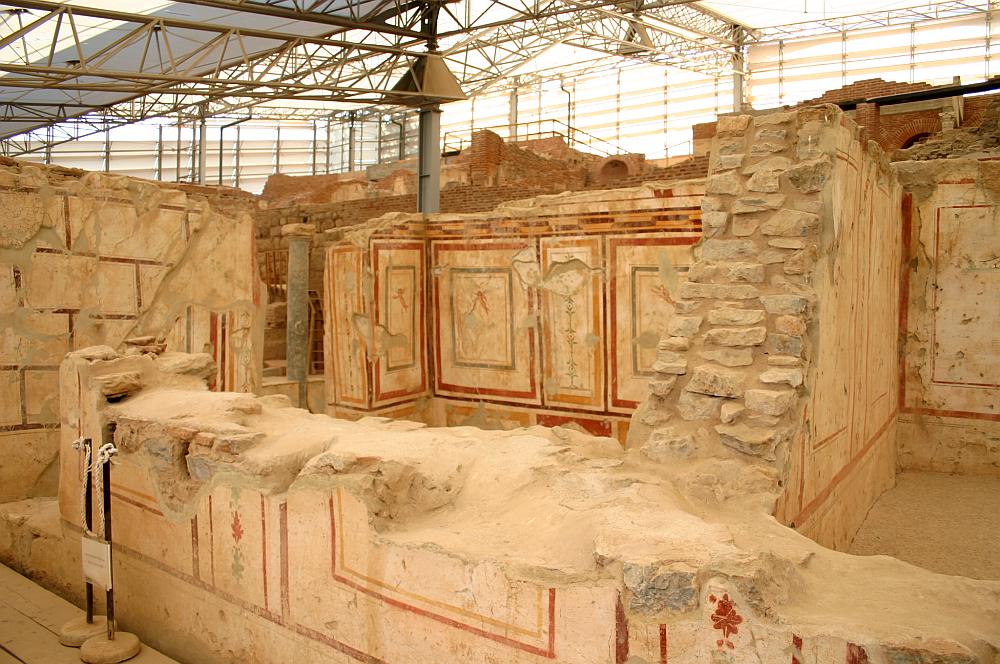
Ephesus, the best preserved city of the Eastern Mediterranean, is one of the places where the atmosphere of the Roman period can be seen in the best way. People from all over the world visit Ephesus to feel the spirit of history.
Ephesus History
Ephesus was first built as a colony of Athens in the 10th century BC. Androclos, son of King Kodros of Athens, chose this area to establish a site and dedicated this new settlement to Artemis, the goddess of fertility in Greek culture, an important mythological character.
Discovery and Development
How Androclos Discovered Ephesus?
According to the story, the oracle of Androclos, who escaped from the Doric invasion of Greece, said that he would find the new settlement based on an incident related to a fish and wild boar. During the migration, while the convoy is frying fish, the fish falls from the pan and disturbs the pig hiding in the bushes. Realizing that the frightened boar has escaped, Androclos follows and hunts the wild boar. The place where Androclos hunted the wild boar is where the city of Ephesus was founded.
The Death of Androclos and the Magnesian Gate
In memory of Androclos, who lost his life in the war with the Carians and was the first king of the city, the "Magnesia Gate", one of the 3 entrances of Ephesus and located on the way to the House of Virgin Mary, was built.
The Sovereignty of King Cresios of Lydia and the Rise of Ephesus
By the middle of the 6th century B.C., the region was dominated by King Cresios of Lydia. During this period, the city, which developed quite a lot in culture and art, reached its Golden Age.
Ephesus Under Persian Rule
Karyalılarla yapılan savaşta hayatını kaybeden ve kentin ilk kralı olan Androclos’un anısına Efes’in 3 girişinden biri olan ve Meryem Ana Evi yolu üzerinde bulunan “Magnesia Kapısı” inşa edilmiştir.
Pers Yönetimi Altında Efes
The people of Ephesus, who did not participate in the lost rebellion started by the Ionians against the Persians, survived the destruction and survived the BC. In 546, it came under the rule of the Persians. In this way, while other Ionian cities rebelled against the Persian rule, Ephesus continued its development.
Alexander the Great Period
Alexander the Great, who defeated the Persians in 334 BC, took all the cities in Anatolia, including Ephesus, from the Persians. The city of Ephesus is of great importance for Alexander the Great, who believed that Artemis was a midwife at his birth. He believes that he is indebted to this city, and by holding a magnificent ceremony at an unprecedented level in Ephesus, a magnificent walk is organized on the sacred road around Panayır Mountain, where the Artemis statues are carried on hands. The people of the city invite the most famous architects, sculptors and painters of the period to the city to work for the construction of the new temple to be built for Artemis. Alexander the Great wants to cover all the expenses of the temple to be built, but the only condition for this is that the good he has done is written on the temple. The Ephesians, who do not want to accept this, respond to Alexander to evaluate the offer; “How can a god build a temple to another god?”
On this, Alexander the Great abolished the tax taken from Ephesus during the Persian rule and said that the remaining income from the tax would be used in the construction of the temple.
After the death of Alexander the Great, it began to be ruled by General Lysimakhos in 287 BC. Since the city harbor was destroyed by alluvium, he decided to move the city's location further west. The name of the new city was "Arsinoeina", the name of Lisimakos' wife. The new city was surrounded by stones 10 meters high and 9 meters long and was very sheltered. When the name Arsinoeina was forgotten, the name of the city was changed back to Ephesus.
B.C. 190 Roman Period
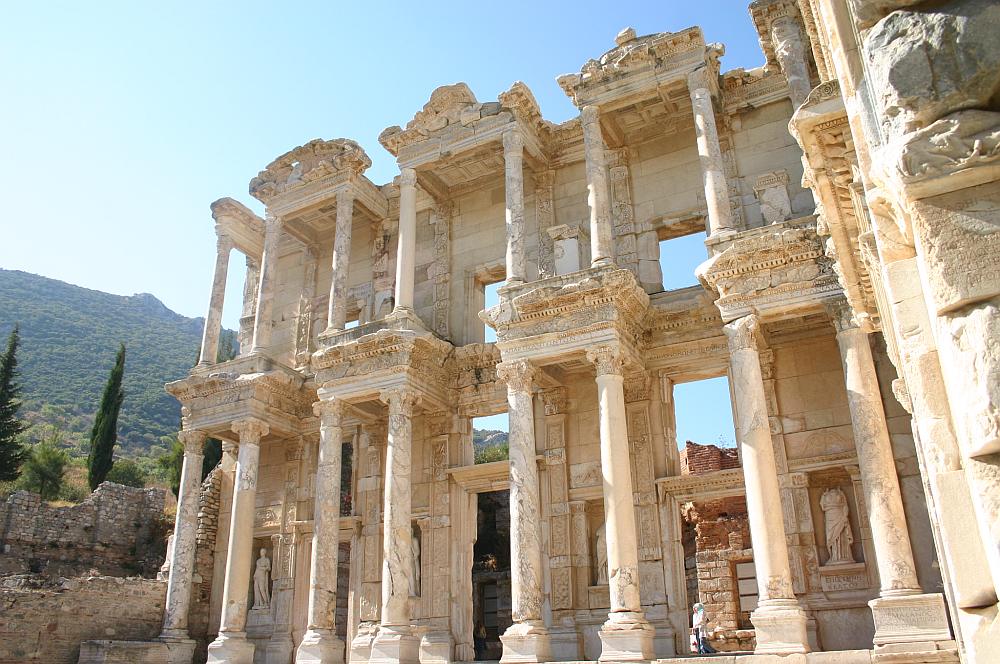
The city, which began to be ruled by Rome in 190 BC, became famous for reaching great wealth and luxury, especially during the reign of Emperor Augustus. During this period, the population of Ephesus reached 225,000 and became the capital of Asia. He increased prosperity by clearing Ephesus, which is the most important port gate opening to foreign countries, from alluvium in the Kaystros River. The "Celsus Library", worthy of the former glory of Ephesus, was built during this period.
The Importance of the Ancient City of Ephesus for Christianity
Ephesus has played a very important role throughout history, especially in the Early Christian period. The teachings of St. Paul, who spread Christianity, were rejected by the people of Ephesus. st. As a result of the long and tiring struggles given by Paul, Christianity began to be accepted by the population around Ephesus. St. Jean and the Virgin Mary visited Ephesus and the Virgin Mary settled on Mount Bülbül near Ephesus in 42 AD.
Important Details About the Ancient City of Ephesus
- The Church of the Virgin Mary, the first church dedicated to the Virgin Mary, is located in Ephesus.
- The fact that the world symbol, which represents the domination of the emperor on the feet of Emperor Trajan in the city, is round, shows that the Ancient Romans knew the true shape of the world even in the 1st century AD.
- The Virgin Mary spent the last years of her life in a small cottage near Ephesus in Turkey.
- The Temple of Artemis, considered one of the 7 wonders of antiquity, is located in Ephesus.
- The Temple of Artemis is the size of a football field and its columns are 30 meters high.
- The Grand Theater in Ephesus has a seating capacity of 24 thousand people.
- It is believed that 7 Christians who escaped from Ephesus lived in a cave near Ephesus for 200 years.
Location of Ephesus, How to Go to Ephesus?
Ephesus is approximately an hour's walk from the Selçuk district, south of İzmir. You have two options for transportation from Izmir to the Ancient City of Ephesus. You can reach the area by a private vehicle or you can use the bus transportation. For transportation by bus, you need to go to the big bus terminal in Izmir. You can use a taxi for this. You should buy your ticket from the bus terminal to go to Selçuk bus station. When you come to Selçuk bus station, you can find minibuses that will take you to the entrance of Ephesus. Your minibus journey will take approximately 10 minutes.