House of the Virgin Mary
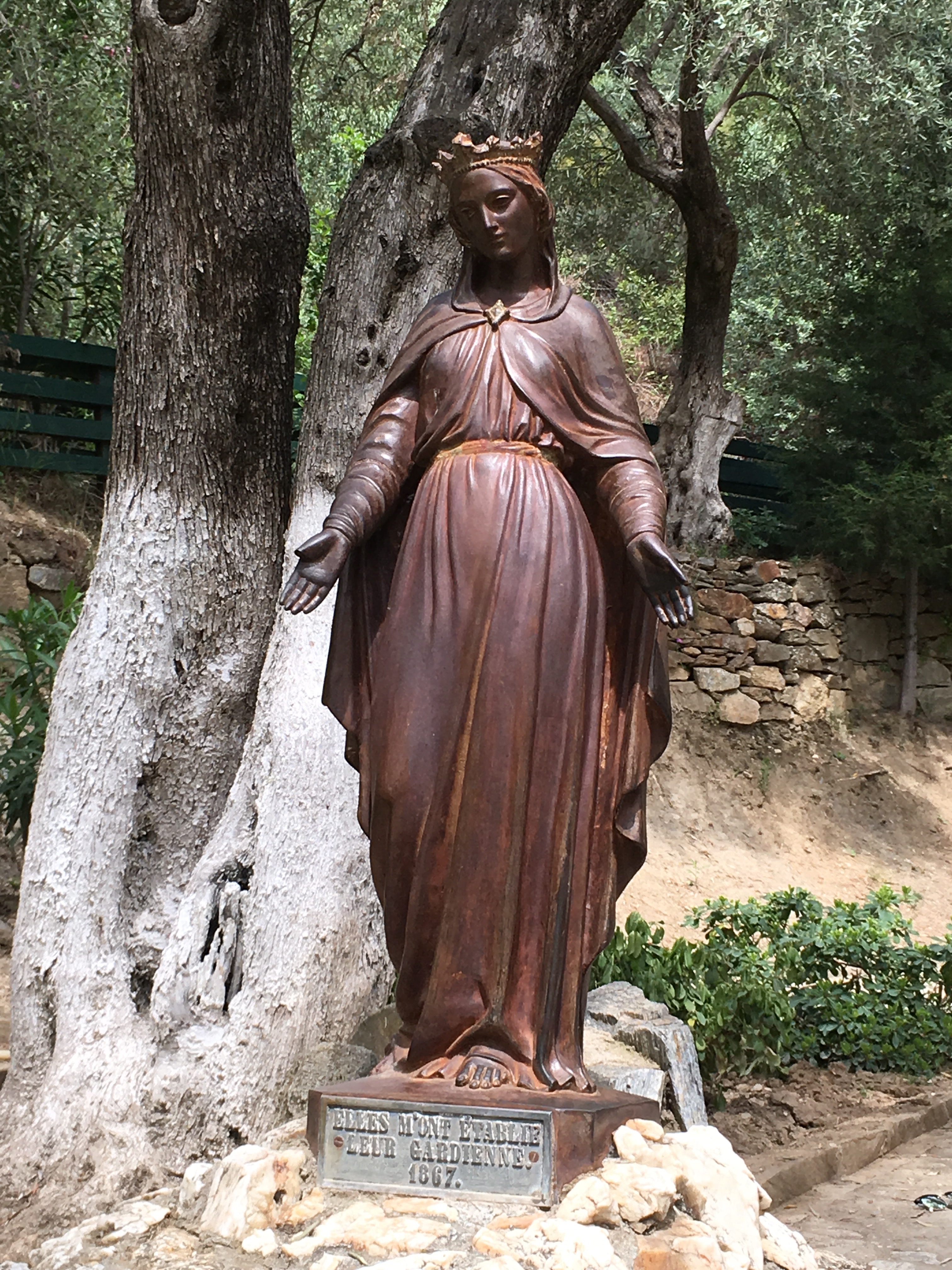
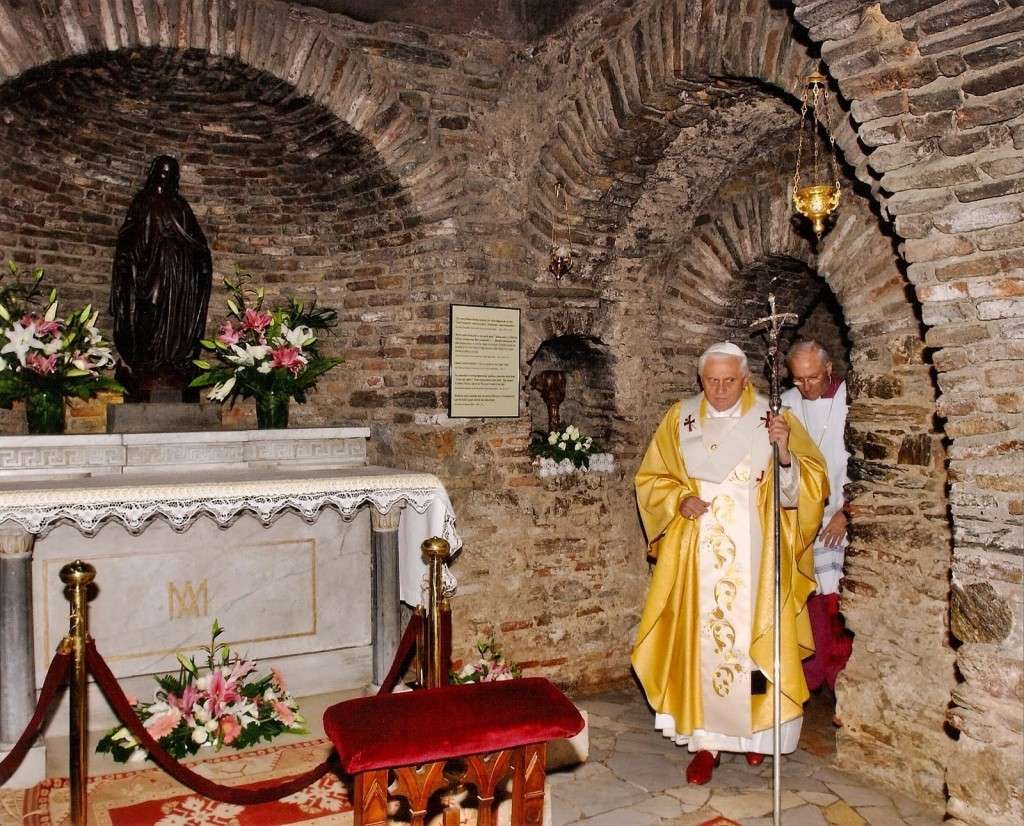
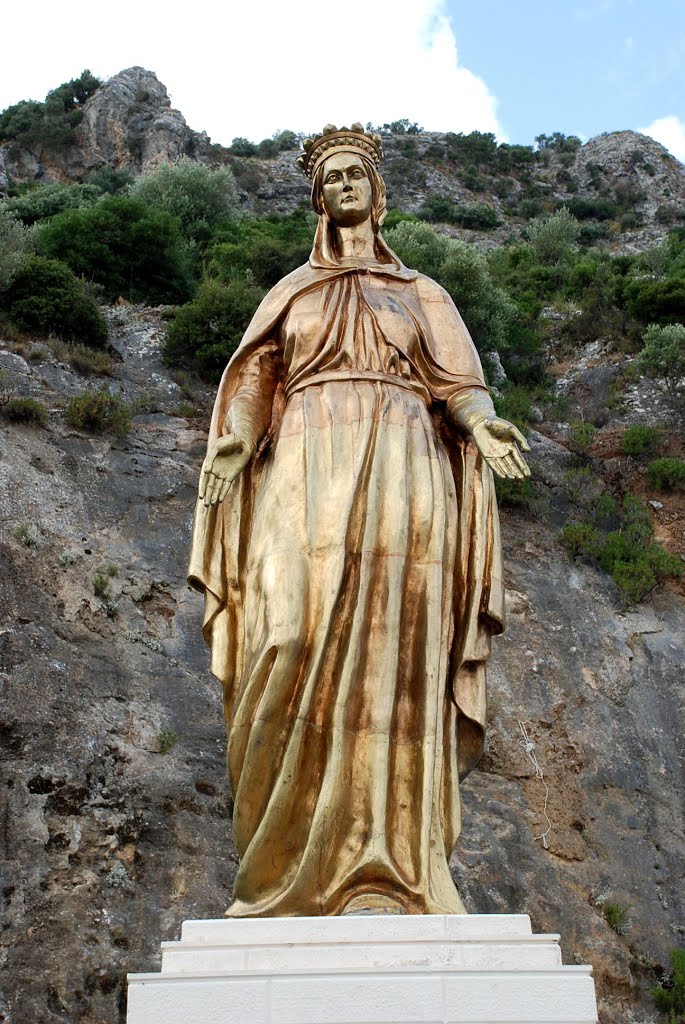
The House of St. Mary, which is 7 km away from Selcuk, is a Catholic temple located in Bülbüldağı, around Ephesus. The discovery of the house was under the favour of the recorded dreams of Anne Catherine Emmerich (1774-1824), who is a Catholic nun in the 19th century. Her visions are united in Clemens Brentano's book. Although the Catholic Church doesn't certify whether the house truly belongs to St. Mary, it receives regular pilgrimages every year.

Anne Catherine Emmerich & Clemens Brentano
Anne Catherine Emmerich, who played the most significant role at the discovery of the House of St. Mary, is a German nun who lived between 1774-1824. Although Emmerich hasn't even been in Ephesus before, she had visions of the part of Ephesus where St. Mary lived. All dreams were recorded by Clemens Brentano.
Emmerich was born into a deeply religious family, but at the same time, her family was poor farmers. Although Emmerich applied for admission to various convents, she was rejected every time because she couldn't afford school fees. Eventually, she was accepted by the Poor Clares in Münster in return for she would learn to play the organ. Emmerich took her religious vows in 1803 at the age of 29 and is known for adhering to the order's rules despite her health problems. Emmerich was called stigmatic after 1813 because the wounds corresponding to the crucifixion wounds of Jesus Christ started to appear on her body.
After that, Emmerich became bedridden, but her fame as a stigmatic and a visionary attracted many well-known visitors. Clemens Brentano was one of them too. He would have endless interviews with her and note down everything she saw. Clemens Brentano, who became her biggest supporter in this process, filled many notebooks in the 5 years until Emmerich's death. Nine years after Emmerich's death, he completed the arrangements and was able to print a book based on the visions he had collected. The second volume could be published after his death in 1854.
In the content of the books, as one of Emmerich's visions, there was a description of the house that the Apostle John built around Ephesus for Mary, where she stayed until she died. Emmerich also gave some details about the location of the house and the topography of its surroundings.
Rediscovery of the House of St. Mary
The House of St. Mary, which is near Ephesus, was discovered twice, and both these were under the favour of the recorded dreams of Anne Catherine Emmerich. On October 18, 1881, relying on the descriptions in the book by Brentano based on his conversations with Emmerich, a French priest, the Abbé Julien Gouyet discovered the house to check the truth of her visions. Abbé Julien Gouyet, who came to Izmir from Paris in 1881, found the geographical features and basic descriptions of the house in the book and used them as a reference. He managed to find an old roofless building with the information he had. It was on a mountain overlooking the Aegean sea and the ruins of ancient Ephesus in Turkey and matched what Emmerich had said. Gouyet believed that the decrepit building was indeed the one described by Emmerich, and he had found the house where St. Mary spent the last years of her life. But Abbé Gouyet's discovery was not taken seriously by most people. The only result he obtained was a study in which he announced that he had found a house allegedly belonging to Mary in the mountains of Ephesus.
The second discovery is based on an event explicate in the records of a monastery. Abbé Gouyet wasn't taken seriously, but ten years later, while the relevant chapter of the book "The Life of Mary" was being read at the French Naval Hospital in Izmir, the details of the house in Ephesus caught the attention of nun Maria de Mandat Grancey, who is the headmistress of the Caritas Girls. Lazarist Father Jung and Father Poulin, who teach at Izmir Sacre Cœur College and come to the hospital to conduct the ritual, ask them to investigate whether the aforementioned "revelations" are true. In the face of this insistence, Father Jung and Father Poulin decided to organize an expedition to Ephesus. Called Henri Jung and Benjamin Vervault, who are former soldiers, by two missionaries were sent to the mountain near Ephesus with a commission of 5. Father Poulin and Father Jung rediscovered the building using the same source in Izmir on July 29, 1891. When they reached the ruined building on the slope of Bülbüldağı, they learned that this four-walled, roofless relic had long been respected by the natives of Şirince, who were descendants of the first Christians of Ephesus. They even called the house Panaya Kapulu, the Doorway to the Virgin. No matter how much this surprises them, they firmly believe that this remains is the house described by Emmerich.
.jpg)
Father Puolin describes what happened in those days as follows: “Father Jung, one of the most dissidents, was called to the head of the team, and he took with him a clergyman like him, who had returned from the wars of 1870 and was skeptical of Emmerich's revelations. He also found a railroad man to assist with the transport of luggage. Deciding to explore the mountain, they set out to definitively solve this problem, which stemmed from a poor dreamer's daydreaming claiming that Emmerich's statements were unfounded. However, on Wednesday, July 29, 1891, dedicated to St. Joseph, coinciding with the Feast of St. Martha, this small group, compass in hand, proceeded in the direction indicated by the book and encountered the mountain. Researchers arrived at an open area around 11 am. They saw several women laboriously dealing with tobacco. If they had been under other circumstances, they might have noticed workers struggling in a field at this altitude. However, at that hour, they shouted: "nerò, nerò(water, water…)" in unison, devastated and exhausted by the sun. The woman said, "We have no water left. But if you go down to the monastery, you can find it." They gestured to a small forest ten minutes away. The convoy immediately moved in that direction. Researchers could not help expressing their astonishment when they saw the ruins of a house, or rather a church, half-hidden under the trees, next to the water source.”(Egidio PICUCCI, House of Virgin Mary in Ephesus-Selçuk, Istanbul 1990, pp. 25-28).
Archaeology
The restored portion of the structure has been distinguished from the original remains of the structure by a line painted in red. Some have expressed doubt about the site, as the tradition of Mary's association with Ephesus "arose only in the twelfth century." Its supporters based their beliefs on the discovery of the Virgin Mary Church, the first church dedicated to the Virgin Mary, in Ephesus in the 5th century.
Importance of the House of Virgin Mary for Christians and Muslims
Due to the lack of scientifically acceptable evidence, the Roman Catholic Church has not provided a corroborating statement that this place is indeed the home where the Virgin Mary spent her last years. Despite this, you can understand that the visits made by the popes viewed this region positively. It is respected and visited by Muslims as well as Christians. Although all these papal visits have no dogmatic value, they show the religious importance of this region. Its international character is constantly growing, with around 300,000 people visiting the sanctuary in some years.
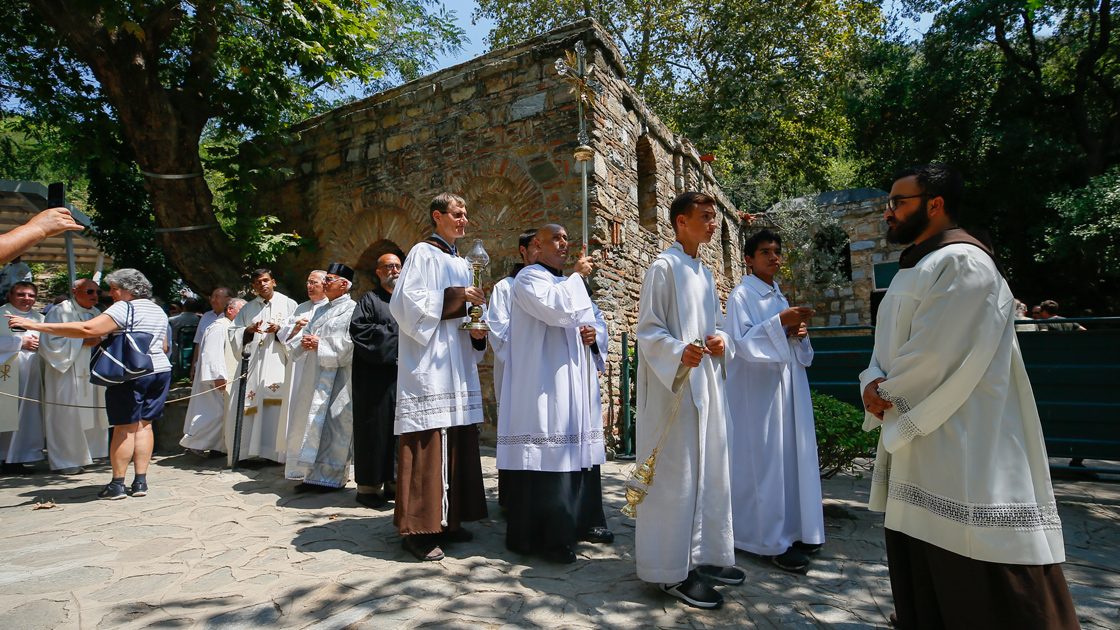
 To commemorate the Assumption of the Virgin, a holy service is held for Christian visitors on August 15 each year. There is a wishing wall where visitors hang their wishes by tying a ribbon outside the temple. Although this initially started as a Turkish tradition, it is imitated by tourists of all faiths who glue pieces of cloth, paper, or plastic.
Getting There
There is no public transport option to go to the House of the Virgin Mary. If you are traveling independently, you need to rent a car, take a taxi or walk 7km from the north gate and 5.5km from the south gate of Ephesus.